
Tankless · Foothills, Glendale & Burbank
Tank-to-Tankless Water Heater Conversion
Switching from a storage water heater to tankless can free up space and provide hot water on demand, but it is a system conversion—not always a direct swap. Your current heater’s location, utility connections and vent may not suit the new equipment. Leon Plumbing helps homeowners understand the work before removing the existing unit. We serve the Sunland/Crescenta Valley area, Glendale, Burbank, Pasadena and nearby core communities, with family-owned service since 1983 and CSLB C-36 license #474827.
See the conversion for yourself
Move the slider across the photo to watch the same garage corner go from a floor-standing tank to a wall-mounted tankless unit — the floor space a tank occupied stays yours.
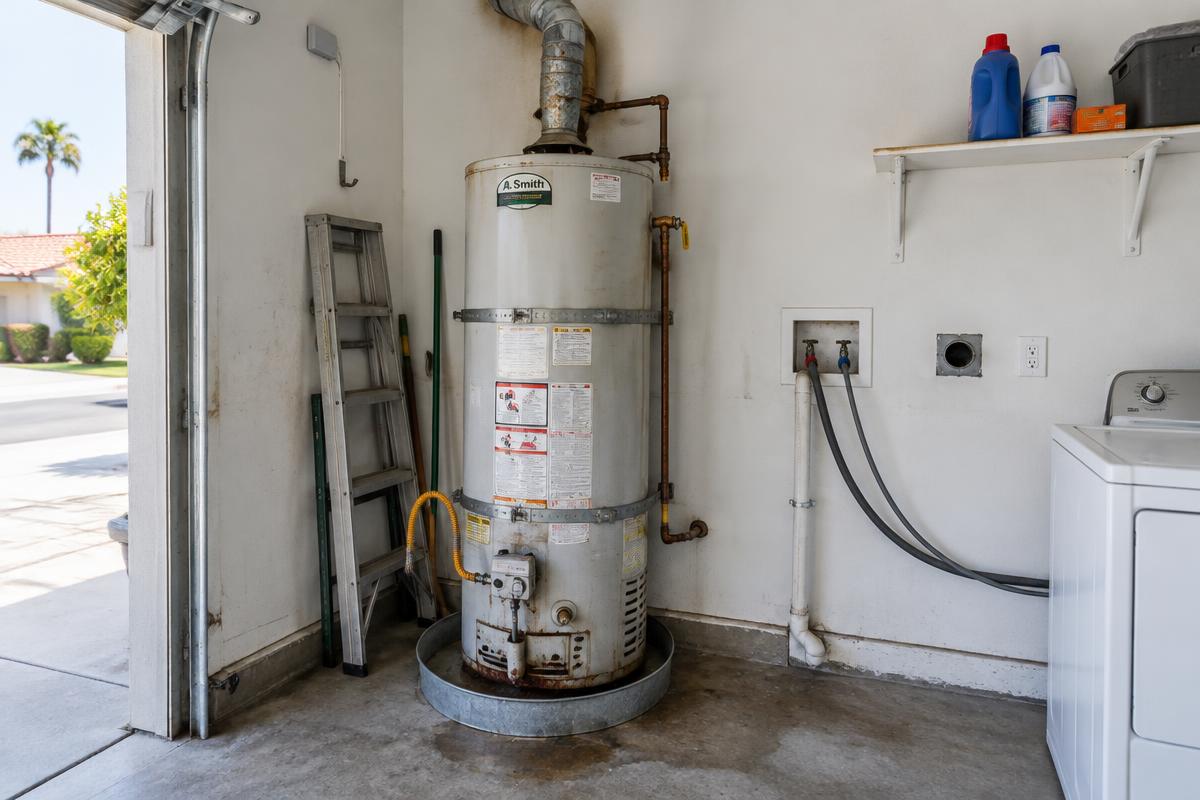
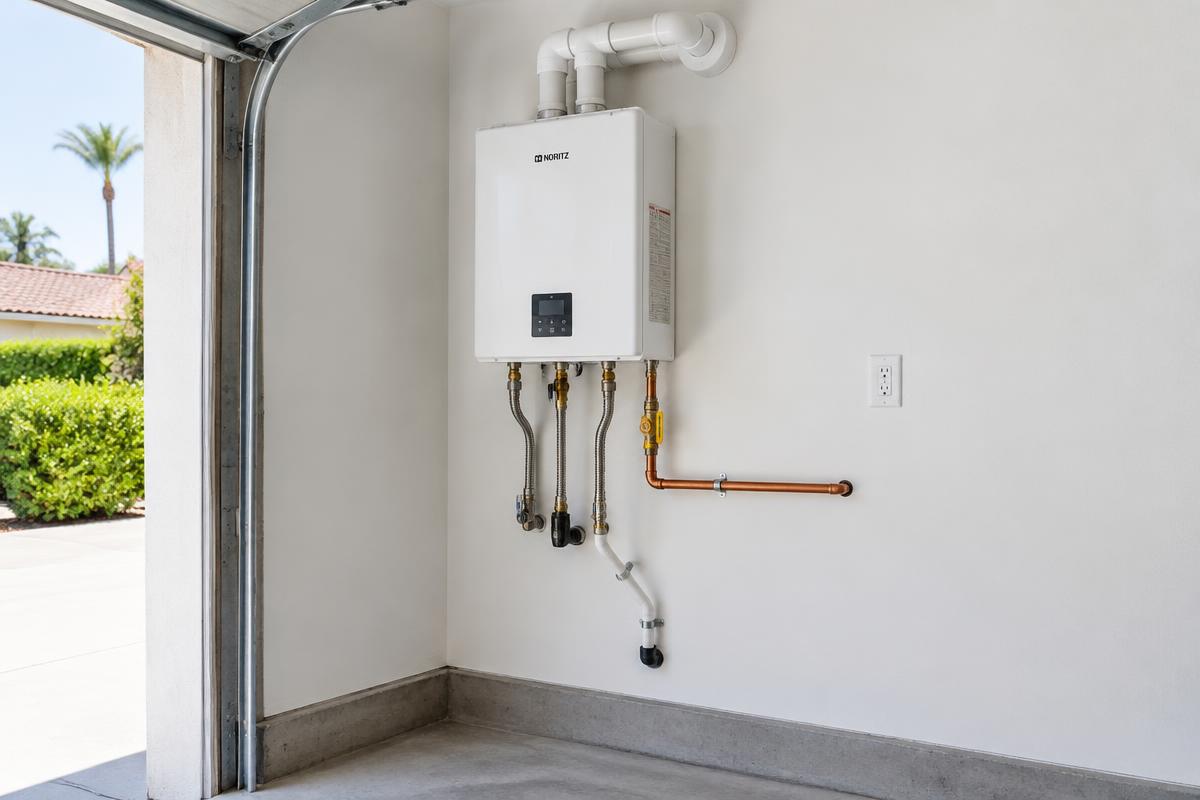 Before · tankAfter · tankless
Drag the handle (or use arrow keys) to reveal the same garage corner after a tank-to-tankless conversion. Placeholder photos — Leon Plumbing will swap in a real job-site conversion soon.
Estimate your yearly savings
Slide to your household size and gas rate. The estimate uses Department of Energy style assumptions for a Southern California gas home; your exact savings depend on your equipment and usage, so treat it as a ballpark — not a quote.
Tank today
$330/yr
Tankless
$186/yr
Estimated savings
$143/yr
That adds up to roughly $1,432 over ten years — before accounting for a tank replacement you would eventually pay for anyway.
Decide what you want to improve
Start with the problem you want to solve: running out of hot water, limited space, an aging tank or inconvenient waits at distant fixtures. Tankless can provide continuous heating within its rated capacity, but it is not unlimited flow. Multiple simultaneous showers or a large tub must be considered during sizing, especially when incoming water is colder.
Tankless does not automatically deliver instant hot water at every faucet. Water still travels through the distribution pipes. If reducing that wait is a priority, we discuss recirculation compatibility, controls and your existing pipe layout. Compare those options before purchasing equipment so the completed system addresses the actual complaint.
Survey the existing gas or electrical supply
A storage heater’s gas line may be too small for a tankless model’s input. We evaluate connected appliance demand, pipe route and sizing rather than copying the old connection. Some projects need new piping or coordination over available utility supply. A safe, adequate supply is a prerequisite to reliable operation, not an optional upgrade to postpone.
Electric tankless conversion needs a separate electrical feasibility review. Whole-home electric models can require substantial circuit and service capacity. A qualified electrician should evaluate the panel and any needed work. Gas and electric choices have different installation constraints; neither is automatically simpler or cheaper for every property.
Rework the location, vent and drainage
The old storage heater’s vent is not automatically reusable. Approved vent material, routing, clearances and termination depend on the new model and the local code. Indoor units need the specified combustion-air/vent arrangement; outdoor units have their own location and protection requirements. We also consider wall mounting, access for service and the routing of hot- and cold-water connections.
Condensing models produce condensate that needs an appropriate drain arrangement, with treatment where required. Service valves make future descaling practical. Moving a heater farther from fixtures may affect the hot-water wait, even if the new appliance performs correctly. We explain these tradeoffs instead of selecting a location solely because there is empty wall space.
Plan permits, downtime and the handover
Permit requirements and inspection arrangements depend on the property’s jurisdiction and the work involved. We set out the proposed scope, access needs and exclusions in writing. Ask when hot water will be unavailable and whether utility, electrical or inspection coordination can affect the schedule; we do not promise every conversion can be completed in one day.
After removing the tank and completing the new connections, commissioning verifies the chosen system’s operation. We explain the controller, maintenance needs and accessible shutoffs, and identify documentation to keep. Compare proposals on equipment and complete scope rather than the heater price alone. If you choose a qualifying new residential Rinnai installation, ask about Leon Plumbing dealer savings up to $2,200; eligibility and actual savings depend on the project.
Tank-to-tankless conversion: common questions
Can you use my tank heater’s existing gas line?
Sometimes, but it must be checked. Tankless input and total connected demand may require a different pipe size or route.
Will tankless give instant hot water at my bathroom?
Not automatically. Pipe length still affects the wait. A compatible recirculation arrangement may help and should be planned with the installation.
Can the old vent be reused?
Only if it meets the new model’s instructions and local code. Many conversions require a different vent system or termination.
Will the conversion be finished in one day?
Timing depends on utility upgrades, access, permits and inspections. We discuss the expected hot-water interruption and scheduling before work starts.
What should I compare in conversion quotes?
Compare the specified unit, sizing assumptions, gas/electrical work, venting, condensate arrangement, service valves, permits and exclusions—not just the appliance price.